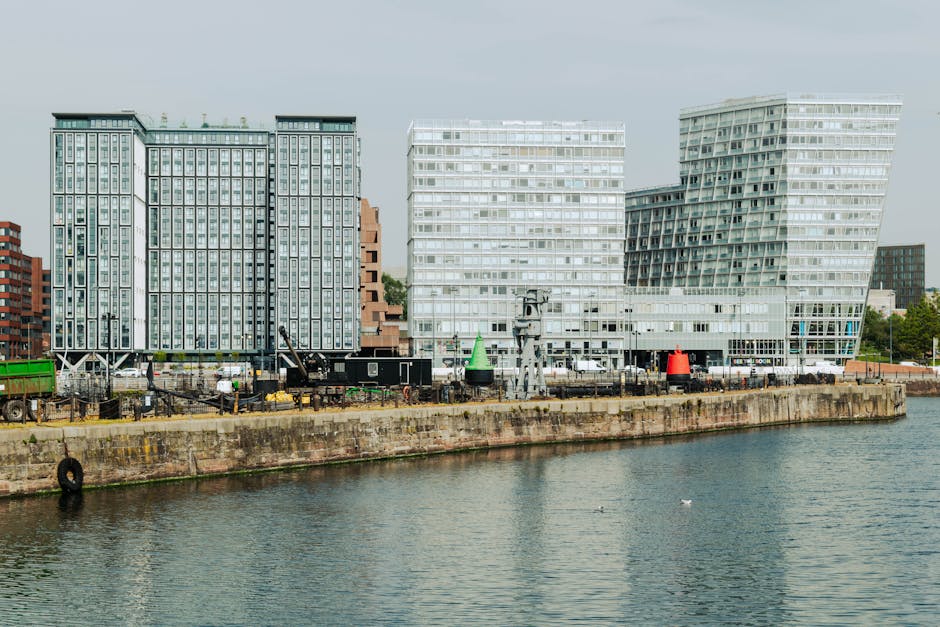
Docklands commercial cleaning for offices near West India Quay
If you manage an office near West India Quay, you already know the reality: the area is busy, the footfall is constant, and office standards are judged quickly. A reception area that looks a bit tired by midweek, a kitchen that smells faintly of coffee and bin liners, or dusty meeting rooms can quietly chip away at how people see your business. That is where Docklands commercial cleaning for offices near West India Quay becomes more than a nice-to-have. It is part of keeping your workplace professional, healthy, and ready for clients, staff, and visitors.
In this guide, we'll walk through what commercial office cleaning in Docklands actually covers, how the service works, what to expect, and how to choose a setup that fits a modern office environment. You'll also find practical checklists, common mistakes to avoid, and a grounded view of compliance and best practice in the UK. No fluff. Just the useful stuff, really.
Table of Contents
- Why Docklands commercial cleaning for offices near West India Quay Matters
- How Docklands commercial cleaning for offices near West India Quay Works
- Key Benefits and Practical Advantages
- Who This Is For and When It Makes Sense
- Step-by-Step Guidance
- Expert Tips for Better Results
- Common Mistakes to Avoid
- Tools, Resources and Recommendations
- Law, Compliance, Standards, or Best Practice
- Options, Methods, or Comparison Table
- Case Study or Real-World Example
- Practical Checklist
- Conclusion
- Frequently Asked Questions
Why Docklands commercial cleaning for offices near West India Quay Matters
West India Quay sits in one of those London pockets where business image matters every single day. Offices here often serve mixed uses: client meetings, shared desks, hybrid teams, and occasional visitors who walk in expecting the place to feel organised from the first glance. If the carpets are grubby, the glass is smudged, or the washrooms feel neglected, people notice. Maybe not consciously, but they notice.
Commercial cleaning is not just about appearance, though appearance is a big part of it. It also supports cleaner touchpoints, tidier kitchens, better floor care, and a more manageable routine for the people who use the space. In practical terms, that means fewer complaints, less friction between teams, and a better working atmosphere. On a wet Docklands morning, when everyone comes in with damp shoes and umbrellas, that matters more than people admit.
There is also a simple operational reason. Offices near West India Quay often deal with compact layouts, shared entrances, and plenty of hard flooring or carpeted areas that need proper maintenance. A quick once-over is one thing. A reliable office cleaning arrangement is another. The second one lasts.
Expert summary: if your office is client-facing, people-heavy, or used on a hybrid schedule, a structured commercial cleaning plan is usually more effective than ad hoc tidying. It keeps standards steady, not just presentable for one morning.
How Docklands commercial cleaning for offices near West India Quay Works
At a good level, office cleaning starts with understanding the site. That sounds obvious, but it is where many poor services go wrong. The cleaner needs to know the layout, the materials, the risk areas, the operating hours, and any access constraints. In Docklands buildings, access and timing can be a bit particular. Delivery routes, concierge arrangements, lifts, and shared corridors all influence how the work gets done.
A professional plan usually begins with a site assessment. This identifies the frequency of visits, the cleaning tasks needed, and any special requirements such as secure areas, kitchen deep cleans, or additional floor care. Some offices need a basic daily maintenance clean. Others need periodic support alongside a more intensive deep cleaning visit, especially after busy periods or office refits.
Typical office cleaning tasks may include:
- dusting desks, ledges, skirting, and communal surfaces
- vacuuming and mopping floors
- cleaning kitchens, sinks, and appliance exteriors
- sanitising washrooms and replenishing consumables if agreed
- emptying bins and handling waste appropriately
- spot cleaning glass, doors, and touchpoints
- targeting carpets, upholstery, and hard floors on a planned schedule
Sometimes the service is built around a wider cleaning programme. For example, an office may use window cleaning for better light and presentation, or hard floor cleaning where reception areas and breakout spaces see heavy traffic. If there has been recent refurbishment, a one-off refresh can be useful before the regular routine takes over again.
The key point is this: commercial cleaning should fit the building, not the other way round. A decent provider will adapt the schedule, equipment, and process so the team can work quietly and efficiently without interrupting the office day. Nobody wants a vacuum battle at 9:10 a.m. in a meeting corridor. Let's face it.
Key Benefits and Practical Advantages
The obvious benefit is a cleaner office. But if that were all, this would be a short article. The real advantages are broader and, in my experience, more valuable over time.
- Better first impressions: clients, partners, and candidates see a more organised, credible workplace.
- More comfortable staff environment: people work better in a space that feels cared for.
- Longer life for finishes: regular maintenance helps protect carpets, floors, and upholstery.
- Less day-to-day disruption: if cleaning is scheduled well, staff can focus on work instead of clearing up after each other.
- Lower risk of hygiene issues: kitchens, toilets, and high-touch areas stay under control.
- Improved consistency: a predictable standard is easier to manage than constant emergency clean-ups.
There is also a subtle commercial advantage. When an office feels orderly, meetings tend to start better. Visitors settle in faster. Staff make fewer small complaints. These things sound tiny, but they add up. A coffee ring on a meeting table is not a crisis, of course, but ten little signs of neglect can make a place feel oddly worn-down.
If carpets or seating are part of your office setup, regular care makes a real difference. A planned carpet cleaning routine can reduce visible wear and help a space stay welcoming. For shared furniture, upholstery cleaning can be just as important. Sometimes the meeting chair is the thing that tells the story first.
| Office area | Typical issue | Why cleaning matters |
|---|---|---|
| Reception | Finger marks, dust, heavy footfall | Creates first impressions and sets the tone |
| Meeting rooms | Table marks, chairs, stale air | Supports professional client meetings |
| Kitchen/breakout | Spills, odours, crumbs, bins | Improves hygiene and staff comfort |
| Washrooms | Limescale, soap residue, traffic dirt | Critical for confidence and cleanliness standards |
| Floors and carpets | Soiling, wear paths, grit | Helps preserve the office environment long term |
Who This Is For and When It Makes Sense
This type of service is not only for large corporate offices. In Docklands, a lot of workplaces are smaller, more flexible, or shared in nature. That means cleaning needs can be surprisingly specific.
It makes sense for:
- professional service firms with client visits
- shared offices and co-working spaces
- financial, legal, or consultancy environments where presentation is part of the brand
- small businesses that do not have in-house facilities staff
- office managers trying to fix inconsistent standards after changing teams or schedules
- new tenancies that want a reliable baseline before moving in
It is also useful after a busy event, a renovation, or a desk reconfiguration. If the office has just been refitted, a one-off visit may be the right starting point before moving into a long-term plan. And if you are dealing with turnover or a change of lease, you may need something closer to one-off cleaning rather than a fixed programme straight away.
Truth be told, some offices wait too long. They assume a weekly tidy-up is enough until complaints pile up. By then, cleaning becomes reactive and a bit more expensive to put right. If you have ever walked into a glass meeting room and thought, "well, this needs sorting," you already know the moment.
Step-by-Step Guidance
If you are planning commercial cleaning for an office near West India Quay, the process is easiest when you break it down. Not glamorous, but effective.
- Assess the space honestly. Walk through reception, work zones, washrooms, kitchens, and corridors. Note what actually gets dirty, not what looks dirty in theory.
- Decide the cleaning frequency. Some spaces need daily support, while others are better served by a few weekly visits plus periodic specialist work.
- List priorities. If the office receives clients, reception and meeting rooms may matter most. If the team is busy and food-heavy, kitchens and bins may be the priority. Simple enough, but often skipped.
- Check access and timing. Early morning, evening, or weekend cleaning may suit the building better. Docklands access can be straightforward, but it still needs planning.
- Define standards. Ask what is included in each clean so expectations are clear. A clean office is good. A clearly defined clean office is better.
- Build in specialist tasks. Carpets, floors, windows, and furniture often need separate attention on a less frequent cycle.
- Review regularly. A good cleaning setup should be checked after a few weeks, then adjusted if the space changes.
One practical tip: make sure the cleaning schedule matches how the office is actually used. A desk area that looks empty on paper may still be heavily used on two hybrid days a week. That sort of thing catches people out all the time.
Expert Tips for Better Results
If you want better results from your Docklands office cleaning routine, a few small adjustments go a long way.
- Keep cleaning and clutter separate. Cleaners can clean, but they should not have to guess where items belong. Storage discipline helps more than people expect.
- Use a mixed schedule. Daily maintenance for high-use zones, plus periodic specialist care for floors or furniture, usually works better than one flat routine.
- Protect high-touch areas. Door handles, switches, lift buttons, kettle handles, and shared desk points often need a bit more attention.
- Choose the right products for the surface. Stronger is not always better. The wrong chemical can dull finishes or leave residue.
- Ask for clear handover notes. If an issue is noticed, such as a stain that needs specialist treatment, it should be logged rather than forgotten.
It also helps to think in layers. A standard clean handles the everyday buildup. Then specialist services handle the stuff that regular wiping simply cannot solve. For example, office cleaners may manage routine tasks, while deeper care for soft furnishings or carpets can be added as needed. That combination tends to feel much more stable.
And yes, a small bit of prevention saves time. A mat at the entrance, a sensible bin layout, and a few wipes available in shared areas can reduce mess more than people realise. Boring? Maybe. Effective? Absolutely.
Common Mistakes to Avoid
Most office cleaning problems are not dramatic. They are just small errors repeated over and over. Annoying, really.
- Choosing on price alone. Cheap quotes can hide thin coverage, poor reliability, or vague service scopes.
- Not defining the scope. "General cleaning" sounds fine until nobody agrees on what it means.
- Ignoring floors and fabrics. Dusting surfaces is not enough if the carpets, sofas, and chairs are carrying the real wear.
- Forgetting seasonal changes. Winter brings wetter entrances and more grit. Summer can bring more open windows, pollen, and dust.
- Not reviewing performance. If something keeps being missed, it should be flagged early rather than tolerated for months.
- Overloading the cleaner with non-cleaning tasks. That creates confusion and usually reduces quality.
One of the most common mistakes is assuming a tidy office equals a clean office. It doesn't. A desk can be neat and still carry dust, residue, or germs on shared surfaces. The visual clue is useful, but it is only part of the picture.
Tools, Resources and Recommendations
Good commercial cleaning depends on the right equipment, but it also depends on process. The best teams use a sensible mix of tools suited to the building and the surface types inside it.
In a typical Docklands office, useful tools and methods may include:
- microfibre cloths for dusting and surface work
- vacuum equipment suited to office carpets and edge detail
- mops and floor systems matched to hard flooring
- non-abrasive products for glass, metals, and screens
- sanitising routines for shared points and washrooms
- specialist treatment for coffee spills, chair marks, or carpet traffic lanes
If the workspace has carpeted meeting rooms or a softer client lounge, linking general cleaning with dedicated rug cleaning or upholstery care can make a noticeable difference. Likewise, entrances and communal corridors may benefit from focused floor maintenance rather than just a quick sweep.
Recommendation: ask any cleaning provider how they handle different surface types, how they manage keys or access cards, and what they do if a stain or damage issue appears. Those answers tell you a lot. More than a brochure does, anyway.
Law, Compliance, Standards, or Best Practice
For office cleaning in the UK, the main point is not to chase jargon. It is to work safely, responsibly, and in line with the building's needs. Offices and cleaning providers generally need sensible arrangements around health and safety, access, waste handling, secure storage of products, and clear communication with building management.
Where best practice is concerned, a few principles stand out:
- Risk awareness: cleaning methods should suit the site, especially if there are wet floors, cable runs, or public access routes.
- Product use: chemicals should be stored and used properly, with care taken around sensitive surfaces and ventilation.
- Insurance and accountability: a reputable provider should have appropriate cover and a clear service process. You can review details through the site's insurance and safety information.
- Policy transparency: good businesses tend to publish their operating standards. That is often a reassuring sign rather than a box-ticking exercise.
You may also want to look at how a provider approaches staff conduct, sustainability, and security. These are not side issues in a commercial setting. They are part of trust. If you want a bit more context on business standards and processes, it can help to read the company's pages on health and safety and recycling and sustainability.
For many offices, especially those with client traffic or shared building access, the question is simple: does the cleaning service make the space safer, tidier, and easier to manage? If yes, you are on the right track. If not, something needs adjusting.
Options, Methods, or Comparison Table
Different offices need different approaches. Here is a simple comparison to help you think it through.
| Cleaning approach | Best for | Strengths | Watch-outs |
|---|---|---|---|
| Daily maintenance cleaning | Busy offices with regular occupancy | Keeps standards steady and visible | Needs clear scope and regular oversight |
| Weekly or periodic office cleaning | Smaller or lightly used offices | Cost-efficient and flexible | May not be enough for high-traffic spaces |
| One-off or deep clean | Moves, refurbishments, and seasonal resets | Resets the space quickly | Not a substitute for ongoing maintenance |
| Combined service with specialist add-ons | Offices with carpets, floors, glass, or soft furnishings | More complete and longer-lasting results | Needs careful planning so the scope stays clear |
If your office sees a lot of foot traffic from the Docklands transport and business flow, a hybrid model often works best. Routine cleaning covers the basics, then specialist tasks handle the stubborn build-up. It is a bit like keeping a car serviced rather than waiting for it to cough and splutter. Same idea.
Case Study or Real-World Example
Picture a small professional office close to West India Quay: ten to fifteen staff, a shared kitchen, two meeting rooms, carpet in the work area, and a hard floor in reception. Nothing extravagant, but enough daily movement to keep things interesting.
At first, the team relied on occasional ad hoc tidying. That worked for a while. Then the visible problems crept in: bins filled up too quickly, the kitchen started to smell a bit stale by Thursday afternoon, and the meeting room carpet showed a darker path where people walked in and out all day. Nothing catastrophic. Just enough to make the office feel less sharp than it should.
The fix was not complicated. A structured cleaning routine was introduced, with attention to shared surfaces, the kitchen, washrooms, and floors. Reception got regular care. Carpets were included in a longer-term maintenance plan. Window cleaning was added later because the office faced enough natural light that the smears became noticeable fast. By the end of the first month, the place simply felt easier to work in.
That is the pattern you see again and again. Not flashy. Just steady, sensible improvement. And honestly, that is what most offices need.
Practical Checklist
Use this checklist before you agree a cleaning plan for an office near West India Quay:
- Have you walked through the office and identified the highest-traffic areas?
- Are reception, meeting rooms, kitchens, and washrooms all clearly included?
- Do you know how often each area needs attention?
- Have access times and building rules been confirmed?
- Do you know who is responsible for keys, alarms, and lock-up?
- Have you agreed what happens with floors, carpets, and upholstery?
- Is there a process for reporting missed tasks or issues?
- Are health, safety, insurance, and waste handling expectations clear?
- Do you have a review date after the first few visits?
- Have you checked that the provider's terms are clear and practical?
If you are still sorting the details, it can be helpful to look at pricing and quotes before making a final decision. Clear pricing is rarely the whole story, but it is a useful start. And if you are unsure whether a long-term programme or a one-off reset is better, a call to the team can usually clarify that quickly. A short conversation saves a lot of guessing.
Get a free quote today and see how much you can save.
Conclusion
Docklands office environments near West India Quay need cleaning that feels dependable, discreet, and appropriate to the pace of the area. Good commercial cleaning is not about making a place look polished once in a while. It is about maintaining a workplace that supports the people using it every day.
When the schedule is right, the standards are clear, and the right surfaces get the right attention, the office starts to feel calmer and more capable. Staff notice. Clients notice. Even if nobody says it out loud, they feel it. That matters.
If you are planning your next cleaning setup, start with the space, not the sales pitch. That approach usually leads to a better fit, fewer headaches, and a nicer office by Monday morning. Which, to be fair, is what everyone really wants.
A well-kept office does not shout. It simply lets good work happen quietly in the background.
Frequently Asked Questions
What does Docklands commercial cleaning for offices near West India Quay usually include?
It usually covers routine office tasks such as dusting, vacuuming, mopping, bin emptying, kitchen cleaning, washroom cleaning, and touchpoint care. Some offices also add carpet, window, floor, or upholstery cleaning depending on use.
How often should an office near West India Quay be cleaned?
That depends on footfall, the number of staff, client visits, and the layout. Busy offices often need daily maintenance cleaning, while smaller offices may only need several visits a week plus occasional deep cleaning.
Is a one-off clean enough for a Docklands office?
A one-off clean is useful after a refurbishment, move, or reset, but it usually is not enough on its own for an office that is used every day. Ongoing maintenance keeps the standards from slipping again.
Can office cleaning be done outside business hours?
Yes, and in many Docklands offices that is the most practical option. Early mornings, evenings, or weekends are often preferred so the team can work without interrupting staff or visitors.
What areas are most important in office cleaning?
Reception, meeting rooms, kitchens, and washrooms tend to matter most because they affect first impressions, hygiene, and day-to-day comfort. Floors and shared touchpoints are also high priority in busy spaces.
How do I know if I need deep cleaning as well as regular office cleaning?
If carpets look tired, furniture is showing wear, or the space has not had a proper reset in a while, deep cleaning can help. It is also useful after events, seasonal build-up, or office changes.
What should I ask before booking a cleaning company?
Ask what is included, how access is managed, what products are used, how issues are reported, and whether the provider can support specialist tasks such as window, floor, or carpet cleaning. Clear answers usually indicate a more reliable service.
Are carpets and upholstery worth including in an office cleaning plan?
Yes, especially in offices with meeting rooms, waiting areas, or heavy foot traffic. Regular care helps the office look fresher and can make the whole environment feel more professional.
What is the difference between general office cleaning and specialist cleaning?
General office cleaning covers everyday tasks like dusting, vacuuming, and kitchen or washroom upkeep. Specialist cleaning focuses on specific materials or problem areas, such as carpets, hard floors, windows, or upholstery.
How can I keep cleaning standards consistent over time?
Set a clear scope, review the service regularly, and make sure issues are reported early. A short review after the first few visits is often enough to catch small problems before they become habits.
Is commercial cleaning in Docklands suitable for small offices too?
Absolutely. Small offices often benefit a lot because they may not have facilities staff or spare time to manage everything internally. A properly scoped service can be surprisingly cost-effective.
Where can I find more information about the company's policies and standards?
You can review the company's about us information, along with its pages on safety, insurance, sustainability, and terms. Those pages are useful if you want a better sense of how the business operates behind the scenes.